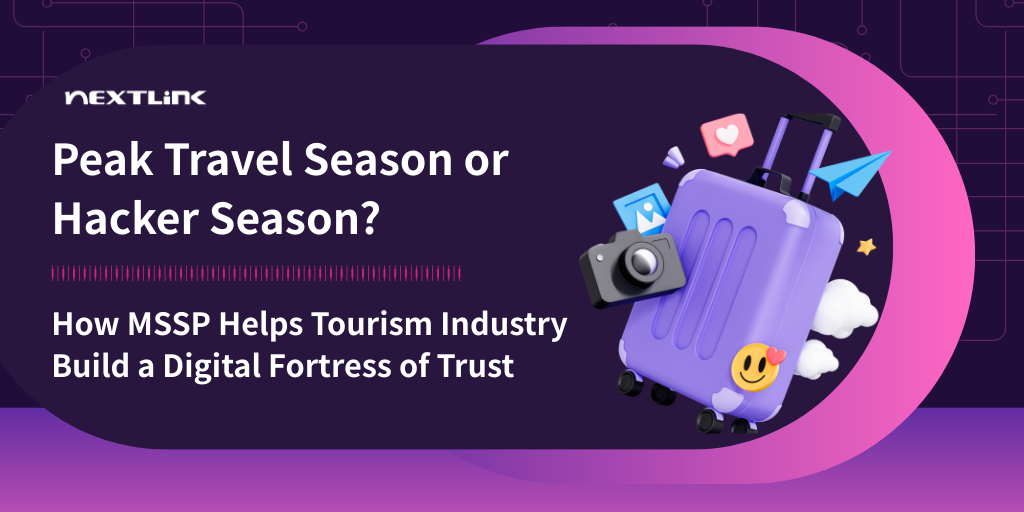
During the 2026 Lunar New Year, while the public was immersed in the joy of travel, a major tourism enterprise reported a significant breach of its information systems caused by external cyberattacks. The company confirmed unauthorized access to certain systems, and sensitive guest data, including names, phone numbers, and booking details — may have been compromised.
This cyberattack is not an isolated incident. From international hotel chains to major Online Travel Agencies (OTAs), cyber threats targeting the tourism industry have become increasingly persistent. Such breaches extend beyond reputational damage; they often trigger subsequent fraudulent activities, potentially leading to rapid erosion of brand trust.
Table of Contents
Table of Contents
Why is the Tourism Industry a Prime Target for Hackers?
1. Seasonal Traffic Surges Create Defensive Gaps
Peak business seasons for tourism are often the moments of greatest cybersecurity vulnerability. During long holidays, IT staff are frequently overwhelmed by system loads, making it difficult to simultaneously monitor for abnormal traffic and latent threats. Hackers exploit this window of reduced vigilance to launch their attacks.
2. Possession of High-Value Personal Data
Hotels, airlines, and travel agencies process vast amounts of traveler information daily. Everything from passport numbers and credit card details to travel itineraries and stay preferences commands a high price on the dark web. For cybercriminals, breaching a major hotel group is equivalent to acquiring a massive, liquid asset.
3. A Complex Supply Chain Ecosystem Expands the Attack Surface
The IT ecosystem in tourism is deeply interconnected. From official booking websites and third-party OTA platforms to Property Management Systems (PMS), POS systems, and travel agency APIs, every node is a potential entry point. A single vulnerability in any link can compromise the entire supply chain.
4. 24/7 Operations Limit Maintenance Windows
Unlike traditional enterprises, hotels cannot easily schedule downtime for system updates and security patching. This “always-on” service model often results in systems running with known vulnerabilities, providing hackers with the perfect opportunity to strike.
5. High Staff Turnover and Low Security Awareness
Frequent staff turnover in the tourism industry makes it challenging to implement consistent cybersecurity training. Consequently, social engineering attacks such as phishing emails or impersonating customer service, become highly effective. A single phishing email disguised as an OTA notification is often the starting point of a major security breach.
What is MSSP? And Why Does the Tourism Industry Need It?
A Managed Security Service Provider (MSSP)is a security solution where an enterprise’s security monitoring, threat detection, and incident response functions are outsourced to a specialized third-party provider. It is the equivalent of providing the enterprise with a professional, 24/7 elite security force ready for combat at any moment.
As ransomware and phishing techniques evolve, traditional firewalls are no longer enough. MSSP provides three key values to the tourism industry:
1. 24/7 Professional Monitoring (SOC)
Hackers never rest, and neither should your defense. A Security Operations Center (SOC) uses automated tools to detect and block threats in real-time, even during holidays.
2. Cost Reduction and Talent Gap Fulfillment
Enterprises can access a full team of experts for a predictable monthly fee, allowing internal IT talent to focus on core business objectives like optimizing the guest experience.
3. Ensuring Regulatory Compliance
With data protection laws (such as the PDPA) becoming stricter and the rise of consumer awareness regarding data protection, MSSP helps ensure systems meet industry standards through continuous scanning and reporting, mitigating legal and financial risks.
Nextlink Technology’s Next-Gen One-Stop Cloud Security Operations
To address the complex digital footprint of the tourism industry, Nextlink offers a Next-Generation MSSP Solution. We provide comprehensive protection from attack surface management to cloud security, safeguarding your core operations and strengthening resilient governance.
1. Continuous Threat Exposure Management (CTEM)
Adopting an external attacker’s perspective, we continuously monitor your digital assets and vulnerabilities. Whether it’s an expired campaign page or a forgotten test database, we fortify your defenses before a threat occurs.
2. Next-Generation Firewall (NGFW)
By establishing a rigorous network perimeter, we precisely block malicious traffic from entering your internal network. This reduces the IT maintenance burden while ensuring high performance and cost-effectiveness, even during peak travel seasons.
3. Dynamic Application Security Testing (DAST)
We conduct “combat-level” security scans on live web applications and APIs. By simulating hacker techniques, we identify logic flaws or authorization vulnerabilities to ensure that booking systems and member apps remain secure and reliable.
4. Cloud-Native Application Protection Platform (CNAPP)
We provide full-lifecycle defense from development to runtime. Through a single integrated platform, we achieve visibility, risk management, and threat protection for your cloud environment, simplifying security operations as you scale or engage in cross-industry collaborations.

Cybersecurity is a Non-Negotiable Brand Investment
In this digital-first era, every breach steals more than just data, it steals the trust you have built with travelers over decades. Cybersecurity should not be an afterthought or a reactive fix, it is a fundamental pillar of brand management.
With Nextlink’s Next-Generation MSSP Solution, you can entrust risk management to experts. This ensures that when threats arise, your business can respond with agility, minimize damage, and return to normal operations swiftly. It is a commitment to every traveler’s privacy and a strategic decision for the longevity of your business.
Is your hotel or travel platform vulnerable to hidden risks? Contact us today to build your “Five-Star Security” roadmap tailored to your platform’s unique needs.