By 2026, AI has moved far beyond being a simple Q&A tool. As generative AI continues to evolve, AI Agents, which are capable of autonomous judgment and execution, are becoming a staple in corporate operations. These agents actively analyze sales data, recommend products, automate workflows, correct errors, and even assist managers in making operational decisions. Essentially, the AI Agent has become the core engine driving revenue and competitiveness.
The primary challenge for retailers today is establishing a practical “data-driven + AI automation” model. Doing so allows brands to respond to consumer needs in real-time and capture every market opportunity in an ever-changing landscape.
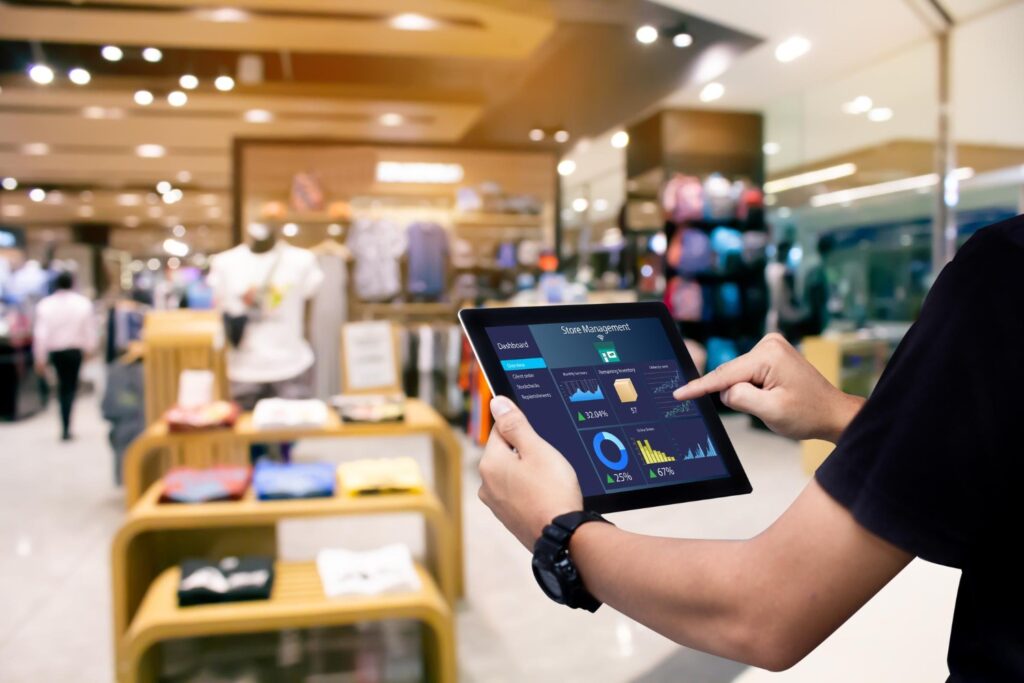
Table of Contents
Table of Contents
Why Retailers Must Accelerate AI and Data Transformation in 2026
1. Consumers expect instant, personalized shopping experiences
Traditional recommendation logic based on static tags or popular item rankings rarely captures what a customer needs at the moment. Success now depends on a brand’s ability to use AI to understand intent instantly and offer the right product at the exact right time.
For example, if someone searches for “shoes for rainy day commutes,” the AI shouldn’t just flag the keyword “shoes.” It needs to understand underlying requirements like “waterproof,” “comfort,” and the “commuting context” to provide a truly relevant experience.
2. Increasing operational complexity
Modern retailers manage physical stores, websites, social platforms, POS, and ERP systems simultaneously. When these systems are siloed and data formats are inconsistent, it becomes nearly impossible to track sales or inventory risks in real-time. This leads to delayed decision-making and slow operations.
3. AI Agents are redefining “Digital Employees“
AI is evolving from a support tool into an agent that executes tasks. It’s no longer just about helping customer service answer questions, it’s about automatically categorizing products, detecting listing errors, and optimizing promotional strategies. AI has officially entered the daily workflow as a “digital employee.”
Implementing Retail AI Solutions in Five Steps
To adapt to these trends, businesses need a roadmap for actual deployment. Nextlink has developed a New Retail Data and AI Solution focused on data integration, generative AI, and customer experience to build intelligent operational capabilities step-by-step.
Step 1: Cross-channel data integrationand standardization
Even the smartest AI requires complete and accurate data. The first priority is consolidating online and offline sources, including e-commerce platforms, physical stores, member profiles, and inventory systems. When data is synchronized and formatted consistently, managers gain a clear view of operations, allowing AI analysis to provide real value.
Step 2: Teaching AI to think like your brand
Many companies find that AI-generated content often feels “off-brand.” This happens because the AI doesn’t yet grasp the brand’s specific tone, product logic, or customer preferences. By using Prompt Engineering and RAG (Retrieval-Augmented Generation) technology, businesses can build a dynamic product knowledge base that aligns AI logic with brand identity.
Step 3: Building smart recommendations and out-of-stock recovery
One of the fastest ways to lose a customer is when an item is out of stock. Previously, this meant a lost sale. Now, AI can mitigate this by using similarity models (analyzing color, function, and price points) to automatically recommend the closest alternative. This preserves the customer experience and protects potential revenue.
Step 4: Automating the review process
AI automation can modularize the product listing process, reviewing and categorizing items while detecting mismatches between images and descriptions. This reduces human error and significantly shortens the time-to-market for new arrivals, freeing up the team to focus on high-level strategy.
Step 5: Data feedback and continuous optimization
AI is not a “set it and forget it” tool. Companies should use visual dashboards to track key metrics like ROI and CTR for AI recommendations. By fine-tuning model parameters based on market feedback, the system becomes increasingly aligned with consumer needs. A mature AI model is defined by its ability to learn and improve, not just its ability to automate.
Building Evolvable Retail Resilience
Retail is moving toward a new era of “intelligent operations”, from cross-channel integration to AI-driven sales and autonomous workflows. When AI is woven into daily operations, companies gain more than just efficiency, they build the resilience and speed necessary to handle market shifts.
Nextlink’s New Retail Data and AI Solutions help brands launch products faster, recover lost sales from stockouts, and build an operational system capable of real-time decision-making. In a fast-moving market, the brands that stay ahead are those that understand their customers instantly and use AI to constantly refine their processes.
Contact us today to learn more about implementing our New Retail Data and AI Solutions.