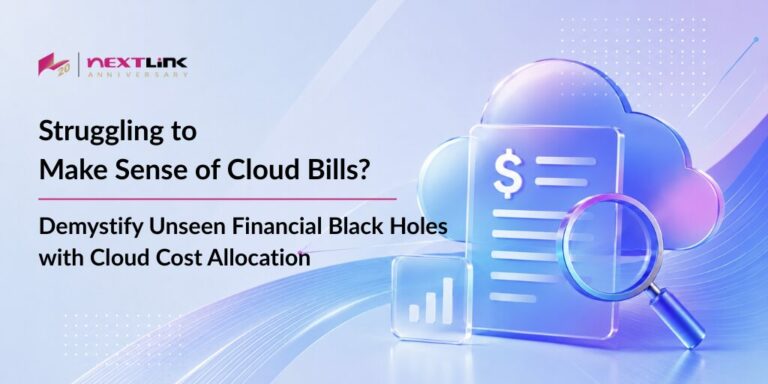
As enterprises embrace multi-cloud strategies during digital transformation, they often face a frustrating reality: every cloud provider uses a different billing format, naming logic, and cost definition. This discrepancy makes it nearly impossible for finance departments to understand engineering data, while engineering teams struggle to reconcile actual costs after amortization. This lack of data interoperability significantly complicates multi-cloud management.
Table of Contents
Table of Contents
Three Dimensions of Multi-Cloud Challenges
Managing cloud environments involves more than just technical hurdles, it spans three core dimensions: data, analysis, and governance.
1. Data Layer: Fragmented Formats and Specifications
Each provider follows its own billing format and naming logic. For example, AWS might label a specific cloud cost as UnblendedCost, while another provider calls it CostInBillingCurrency. These mismatched field structures and naming conventions force enterprises to waste time on tedious data cleaning and ETL (Extract, Transform, Load) processes and leaves little room for high-value analysis or cost optimization, dragging down operational agility.
2. Analysis Layer: Disconnects Between Metrics and Value
Providers calculate core financial metrics differently, such as Amortization or Effective Cost. Consequently, finance departments struggle to interpret technical data from engineering teams when auditing budgets, creating a gap in how different departments perceive “cloud value.” Without a unified cross-cloud query standard, enterprises cannot easily evaluate resource efficiency or build standardized cost databases. This delays how decision-makers react to spending changes and hinders real-time cost control.
3. Governance Layer: Disordered Permissions, Groups, and Organizations
In multi-cloud architectures, platforms maintain independent permission management and resource grouping logic. Cross-departmental cost attribution often becomes a mere formality because organizations lack unified tagging standards and chargeback rules. This chaos prevents enterprises from enforcing “cost accountability.” When a project’s costs spike unexpectedly, leadership often cannot trace responsibility or monitor anomalies effectively, turning cloud spending into an unmanageable financial black hole.
What is FOCUS?
To resolve inconsistencies in formats, naming, and metrics, the FinOps Foundation introduced FOCUS (FinOps Open Cost & Usage Specification). This open-source standard defines exactly how each row of billing data should be named and formatted. By unifying rules for cloud, SaaS, and software providers, FOCUS helps FinOps teams interpret and analyze costs across all vendors more easily, leading to more accurate tracking and forecasting.
How FOCUS resolves multi-cloud challenges
By establishing globally unified field names and definitions, FOCUS transforms multi-cloud management in three key ways:
1. A Unified Language
Under FOCUS, regardless of the source, similar data points map to a single name. For instance, disparate terms like UnblendedCost or CostInBillingCurrency both map to EffectiveCost. Enterprises no longer need to cross-reference terms and can jump straight into analysis, accelerating decisions.
2. Standardized Data Structures
FOCUS mandates a specific schema and format for every row of data, requiring consistent core fields and column names. This allows enterprises to build unified cost databases effortlessly. Because the data structure is standardized, systems avoid reporting errors caused by misaligned fields, making cross-platform comparisons intuitive.
3. Automation Over Manual Labor
When providers produce FOCUS-compliant data, they simplify the entire processing workflow. Teams no longer need to write complex conversion programs to clean data, instead, they can focus on high-value tasks like optimizing budget allocation or identifying potential savings.
AICOM®: Moving from Data Visualization to Effective Governance
While FOCUS standardizes underlying data into a unified language, realizing the full value of cloud operations requires addressing the challenges within the data analysis and governance layers. AICOM®, Nextlink’s Artificial Intelligence Cloud Optimization Management, is designed to shift FinOps from mere “cost optimization” to “decision-driven” operations.
Precision Analysis: Multi-Dimensional Dashboards and Trend Monitoring
AICOM® transforms data into intuitive billing dashboards that help enterprises grasp their financial status instantly. Through cost trend analysis and anomaly monitoring, managers track every spending fluctuation in real time and receive alerts as soon as costs change unexpectedly, ensuring decision-making remains precise and agile.
Superior Governance: RBAC User Permission Management
To fix disordered governance, AICOM® provides a rigorous permission management mechanism. By implementing a Role-Based Access Control (RBAC) model, the platform establishes clear permission hierarchies and functional roles. This reduces risks from manual configuration errors or data leaks while meeting compliance requirements and enforcing “Zero Trust” and “Least Privilege” principles in daily operations.
Embrace Standards to Start a New Era of Cloud Governance
Enterprises today should no longer be limited by tedious data conversion. FOCUS provides a universal metric for cloud cost management, while AICOM® builds the complete path from data to decision-making. By combining cost trend analysis with cloud governance, businesses can precisely control every cent of their cloud investment and break down informational silos between departments. This turns cloud resources into a core engine for innovation. Contact us today to learn more about AICOM® and let us help you upgrade your multi-cloud transformation to comprehensive cloud governance.